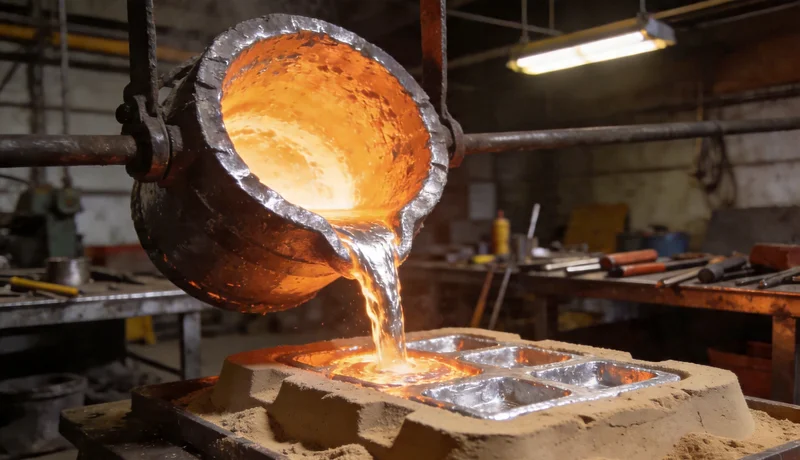
Aluminum Casting Heat Treatment Guide: T4, T5, T6 Tempers Explained
Heat treatment turns a heat-treatable aluminum casting from an as-cast part into one that meets demanding structural requirements. This guide explains the T4, T5, T6, and T7 tempers — what each process does, the temperatures and alloys involved, and why high-pressure die castings are usually not solution treated. For how alloy chemistry drives these results, pair it with our material comparison and A360 alloy guide.
What Is Heat Treatment for Aluminum Castings?
Heat treatment is a controlled cycle of heating, holding, and cooling that changes the microstructure of an aluminum casting to improve its mechanical properties — primarily strength and hardness, sometimes ductility or dimensional stability. For heat-treatable cast alloys, it is the difference between an as-cast part and one that meets demanding structural requirements.
The strengthening mechanism for most cast aluminum alloys is precipitation hardening (age hardening). Alloying elements such as magnesium, silicon, and copper are dissolved into the aluminum at high temperature, locked in place by rapid cooling, then allowed to form fine strengthening precipitates during aging. The result is reported in a temper designation — T4, T5, T6, and so on. For how alloy chemistry interacts with these tempers, see our material comparison.
The T-Temper Designation System
Temper designations follow the Aluminum Association system. The letter "T" means thermally treated, and the digits describe the specific sequence of operations. These designations apply to both cast and wrought aluminum, though the exact cycles differ.
| Temper | Process | Effect |
|---|---|---|
| T4 | Solution heat treated, then naturally aged at room temperature. | Moderate strength, good ductility; properties stabilize over days. |
| T5 | Artificially aged only (no separate solution treatment), from the as-cast or as-fabricated state. | Modest strength increase; lowest cost; minimal distortion. |
| T6 | Solution heat treated, then artificially aged. | Highest strength and hardness; the most common high-strength temper. |
| T7 | Solution heat treated, then overaged (stabilized). | Slightly below peak strength, with improved stability and stress-corrosion resistance. |
T4 — Solution Treated and Naturally Aged
T4 castings are solution heat treated and then aged at room temperature rather than in an oven. The part gains moderate strength while retaining good ductility and formability, which is useful where some post-treatment handling or forming is required. Because natural aging continues over time, T4 properties keep rising for several days after quenching before they stabilize.
T5 — Artificially Aged Only
T5 is the simplest and lowest-cost heat treatment: the casting is artificially aged without a separate solution treatment, often using residual heat from the casting process. It produces a modest strength increase with very little distortion, which makes it attractive for parts where dimensional stability matters more than peak strength. T5 is frequently applied to die castings and extrusions that cannot tolerate the distortion of a full solution-and-quench cycle.
T6 — Solution Treated and Artificially Aged
T6 is the workhorse high-strength temper for aluminum castings. The part is solution heat treated to dissolve alloying elements, quenched to lock them in a supersaturated solution, then artificially aged in an oven to precipitate fine strengthening particles. This delivers the highest combination of strength and hardness available from the alloy.
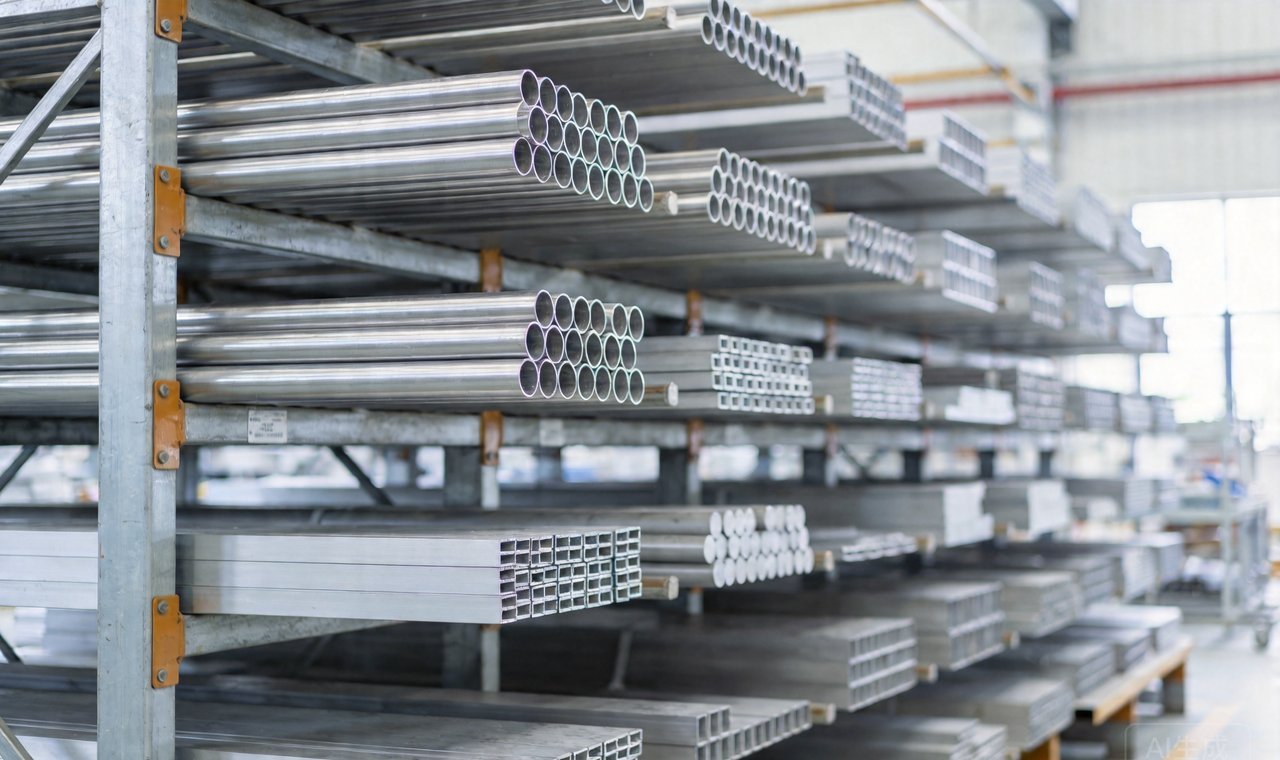
For A356 castings, a representative T6 cycle is solution treatment near 540 °C (about 1000 °F) for several hours, a water quench, and artificial aging near 155–170 °C (about 310–340 °F). Exact times and temperatures depend on the alloy, section thickness, and the specification you are working to — always confirm against the alloy datasheet or applicable standard rather than a generic figure.
T7 — Overaged for Stability
T7 takes a solution-treated casting past peak strength into a deliberately overaged condition. Strength drops slightly below T6, but the part gains better dimensional stability and improved resistance to stress-corrosion cracking. T7 is chosen for components that must hold tight tolerances in service or operate in corrosive environments.
Why High-Pressure Die Castings Are Usually Not Solution Treated
Conventional high-pressure die castings are generally not given a full T6 solution treatment. The high-speed injection that makes die casting so productive also traps air and gas in the part. During the high-temperature solution step, that entrapped gas expands and causes surface blisters and dimensional distortion.
As a result, die castings are most often supplied as-cast (F temper) or given a T5 age that avoids the solution step. Where higher strength is required from a die casting, specialized vacuum or high-integrity die casting processes reduce entrapped gas enough to allow heat treatment. Sand and gravity castings, which solidify more slowly and trap less gas, are routinely solution treated to T6 — another factor in choosing the right process for your casting partner.
Heat-Treatable Cast Aluminum Alloys
Not every cast alloy responds to heat treatment. Strengthening by aging requires alloying elements that form precipitates — chiefly the magnesium-silicon and copper systems. Common heat-treatable casting alloys include the Al-Si-Mg family such as A356 and 356, which respond well to T6, and copper-bearing alloys used where higher strength is needed.
Alloys lacking these elements gain little from solution treatment and are typically used as-cast or with a stabilizing age only. When you specify a temper, confirm the alloy is actually heat-treatable in that condition; pairing the wrong temper with an alloy wastes processing cost without delivering the expected properties.
The Heat Treatment Process Step by Step
A full T6 cycle has three distinct stages, each of which must be controlled to hit the target properties. Skipping or rushing any stage changes the outcome, which is why heat treatment is run to a documented specification rather than by feel.
1. Solution heat treatment. The casting is held at an elevated temperature — for many Al-Si-Mg casting alloys near 520–540 °C (roughly 970–1005 °F) — long enough for the alloying elements to dissolve uniformly into the aluminum matrix. Hold times depend on section thickness; thicker walls need longer to reach a uniform solid solution. Holding too long or too hot risks incipient melting at grain boundaries, while too short leaves elements undissolved and limits the strength achievable later.
2. Quenching. Immediately after the solution hold, the part is rapidly cooled — usually in water — to trap the dissolved elements in a supersaturated solid solution before they can precipitate out. Quench rate is critical: too slow and strength suffers; too aggressive and the part can distort or build residual stress. Hot-water or polymer quenches are sometimes used to balance property development against distortion in complex castings.
3. Aging. The supersaturated part is then aged so fine strengthening precipitates form. Natural aging (T4) happens at room temperature over days; artificial aging (T6) holds the part in an oven, commonly near 150–175 °C (about 300–350 °F) for several hours, to reach peak strength faster and more repeatably. Aging time and temperature are tuned to land on, just before, or just past peak hardness depending on whether T6 or a stabilized T7 condition is wanted.
What Heat Treatment Actually Changes
The practical payoff of heat treatment is a large, controllable gain in mechanical properties from the same alloy. Moving a heat-treatable Al-Si-Mg casting from the as-cast (F) condition to T6 can substantially raise yield and tensile strength and increase hardness, which is why structural and safety-critical cast parts are so often specified in a heat-treated temper.
Heat treatment also lets engineers trade properties deliberately. T6 maximizes strength; T7 sacrifices a little strength for dimensional stability and stress-corrosion resistance; T4 keeps more ductility for parts that see impact or further forming. Choosing the temper is therefore a design decision, not just a processing detail — it should follow from the loads, environment, and tolerance the part must hold in service. Our cost reduction tips cover how temper choice interacts with machining and total cost.
Common Heat Treatment Problems
Heat treatment adds value but also adds ways for a part to go wrong, so it belongs to a controlled quality process. The most common issues trace back to the same three stages.
| Problem | Typical cause | Prevention |
|---|---|---|
| Distortion / warping | Severe quench, thin or unsupported sections. | Fixturing, controlled or polymer quench, racking. |
| Residual stress / cracking | Too-fast quench, sharp section changes. | Quench-rate control; stress relief; good design. |
| Blistering | Entrapped gas expanding at solution temperature (common in HPDC). | Avoid solution treating gassy die castings; use T5 or vacuum casting. |
| Under-strength | Incomplete solution, slow quench, or wrong aging. | Verify time/temperature; hardness or tensile testing. |
| Incipient melting | Solution temperature too high for the alloy. | Hold within the alloy's specified window. |
Reputable foundries verify results rather than assume them — hardness testing is a fast in-line check, and tensile testing of cast bars or witness samples confirms the temper meets the specification. These are exactly the kinds of records you should ask for when you choose a casting partner.
Specifying Heat Treatment Correctly
To get the temper you expect, call it out unambiguously on the drawing. State the alloy, the temper designation (for example, A356-T6), and the property or hardness requirement you actually need to meet — not just the temper letter. Where the part serves a regulated industry, reference the governing specification so the foundry runs the qualified cycle.
Be realistic about which process can deliver the temper. As covered above, conventional die castings generally cannot take a T6 without risking blisters, so a drawing that pairs HPDC with T6 forces either a process change (sand, gravity, or high-integrity die casting) or a temper change. Aligning alloy, process, and temper early — before tooling is cut — avoids expensive rework. For background on alloys that pair well with each temper, see our A360 alloy guide and aluminum casting guide.
Alloy and Temper Quick Reference
The table below summarizes how common cast aluminum alloys typically respond to heat treatment. Treat it as orientation only: exact temperatures, hold times, and resulting properties are governed by the alloy datasheet and the applicable specification, and they vary with section thickness and casting process. Always confirm the cycle against an authoritative source before production.
| Alloy | Process commonly used | Typical temper | Notes |
|---|---|---|---|
| A356 / 356 | Sand, gravity (permanent mold) | T6, T7 | Al-Si-Mg; responds very well to solution + age; widely used for structural castings. |
| A357 | Sand, gravity, investment | T6 | Higher-Mg variant of A356 for higher strength. |
| A380 / ADC12 | High-pressure die casting | F (as-cast) or T5 | Generally not solution treated due to entrapped gas; T5 age gives modest gains. |
| A413 | Die casting | F or T5 | High-Si, pressure-tight; usually used as-cast. |
| 319 / 333 | Sand, gravity | T5, T6 | Al-Si-Cu; heat-treatable for higher strength. |
Notice the pattern: sand and gravity castings dominate the heat-treated tempers, while die casting alloys cluster in as-cast or T5. This is the metallurgical reason process selection and temper selection are linked decisions, not independent ones.
Cost, Lead Time, and Standards
Heat treatment is an added operation, so it adds cost and lead time that should be planned, not discovered. A full solution-quench-age cycle ties up furnace capacity for hours and adds handling, fixturing, and verification steps. T5 is much cheaper because it skips the solution and quench stages, which is part of why it is favored where its modest strength gain is enough. Budget for the heat-treat step — and for any straightening or machining needed to correct quench distortion — when you quote a heat-treated part.
For regulated work, heat treatment is run to recognized standards. Specifications such as the AMS (Aerospace Material Specification) series and ASTM standards define cycles, properties, and testing for cast aluminum tempers, and customers often impose their own controlled-process requirements on top. Where a part is safety- or flight-critical, the foundry should hold the relevant aerospace or automotive approvals and provide test records proving the temper was achieved. Asking for those records is part of qualifying a supplier, as covered in our guide on how to choose a casting partner.
Natural vs Artificial Aging
Aging is where most of the strength of a heat-treatable casting actually develops, and it comes in two forms. Understanding the difference clarifies why T4 and T6 behave the way they do, and why some tempers continue to change after the part leaves the foundry.
Natural aging occurs at room temperature. After solution treatment and quenching, the supersaturated solid solution slowly forms strengthening clusters over hours and days with no added heat — this is the T4 condition. Because the process is gradual, T4 properties are not fully stable immediately after quenching; strength keeps rising for several days before leveling off. Designers should account for this when properties are measured or when parts are machined soon after treatment.
Artificial aging applies controlled heat — typically in the 150–175 °C range for several hours — to drive precipitation faster and more completely, producing the higher, more repeatable strength of T6. By tuning the aging time and temperature, the foundry can land the part on peak strength (T6) or deliberately past peak into an overaged, more stable condition (T7). Artificial aging is preferred for production because it gives consistent, predictable results on a fixed schedule rather than relying on time at ambient conditions.
The trade-off is straightforward: natural aging is simpler and preserves more ductility, while artificial aging delivers higher and more uniform strength at the cost of an oven cycle. Which one a part needs flows directly from its service requirements — the same logic that governs the temper choice covered earlier.
Verifying the Temper Was Achieved
A temper on a drawing is a property requirement, and properties must be verified, not assumed. Because the same alloy can finish at very different strengths depending on how carefully the cycle was run, reputable foundries confirm results before parts ship and keep the records to prove it.
Two checks do most of the work. Hardness testing is fast, non-destructive, and correlates well with strength for a given alloy and temper, making it a practical in-line screen on production parts. Tensile testing of separately cast test bars or witness coupons gives the actual yield strength, ultimate tensile strength, and elongation, and is the definitive evidence that the temper meets specification. For critical castings, foundries may also use conductivity testing as an indirect indicator of the aging condition.
When you receive heat-treated castings, ask for the test data tied to the lot. A supplier that routinely provides hardness or tensile results, and that ties them back to the heat-treat batch, is demonstrating the kind of process control that separates a dependable partner from a risky one. This verification mindset connects heat treatment back to the broader quality control system that should sit behind every cast part you buy.
Frequently Asked Questions
- What is the difference between T4 and T6 heat treatment?
- Both start with solution heat treatment, but they differ in aging. T4 is naturally aged at room temperature, giving moderate strength with good ductility. T6 is artificially aged in an oven after quenching, producing the highest strength and hardness. T6 is the standard choice when maximum strength is required from a heat-treatable casting.
- What is stronger, T5 or T6 aluminum?
- T6 is stronger. T6 includes a full solution heat treatment, quench, and artificial aging, which develops peak strength and hardness. T5 is only artificially aged from the as-cast state without solution treatment, so it gives a more modest strength increase. T5's advantage is lower cost and far less distortion, not strength.
- What is the difference between T4 and T5 aluminum?
- T4 is solution heat treated and then naturally aged at room temperature, which builds moderate strength with good ductility. T5 skips the solution treatment entirely and is only artificially aged, often using residual casting heat. T4 reaches higher strength because of the solution step; T5 is cheaper and distorts less.
- Can die castings be heat treated to T6?
- Usually not. Conventional high-pressure die castings trap air and gas during high-speed injection, and the high-temperature solution step makes that gas expand, causing blisters and distortion. So die castings are typically left as-cast or given a T5 age. Special vacuum or high-integrity die casting reduces entrapped gas enough to allow heat treatment.
- What temperature is T6 heat treatment for aluminum?
- It depends on the alloy. For a common A356 casting, a representative T6 cycle is solution treatment near 540 °C (about 1000 °F), a water quench, then artificial aging near 155–170 °C (about 310–340 °F). Exact times and temperatures vary with alloy and section thickness, so always confirm against the alloy datasheet or applicable standard.